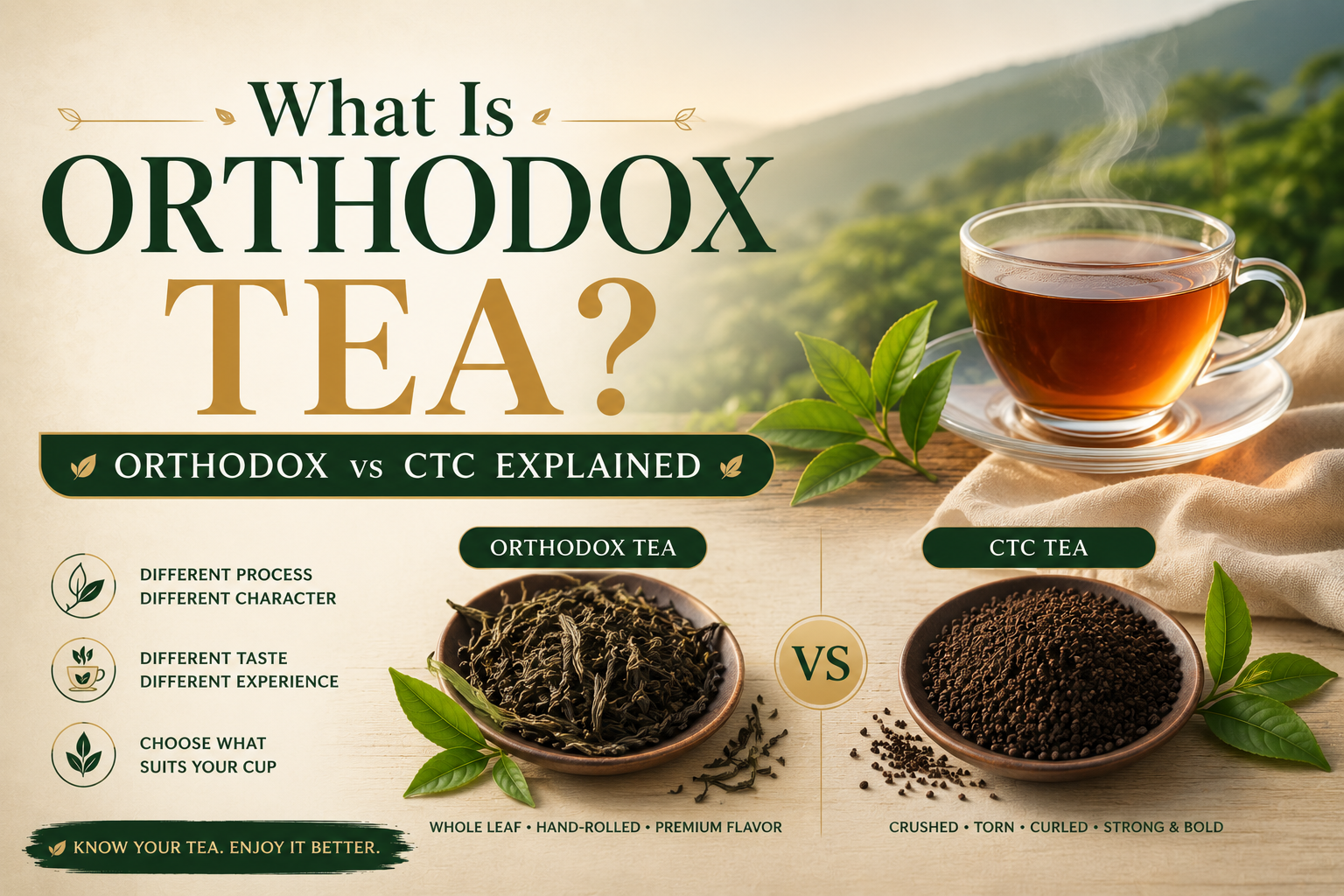
 Monk Sera Tea
Brew Mindfully, Live Calmly
Monk Sera Tea
Brew Mindfully, Live Calmly
Monk Sera Tea
Brew Mindfully, Live Calmly
Monk Sera Tea
Brew Mindfully, Live Calmly
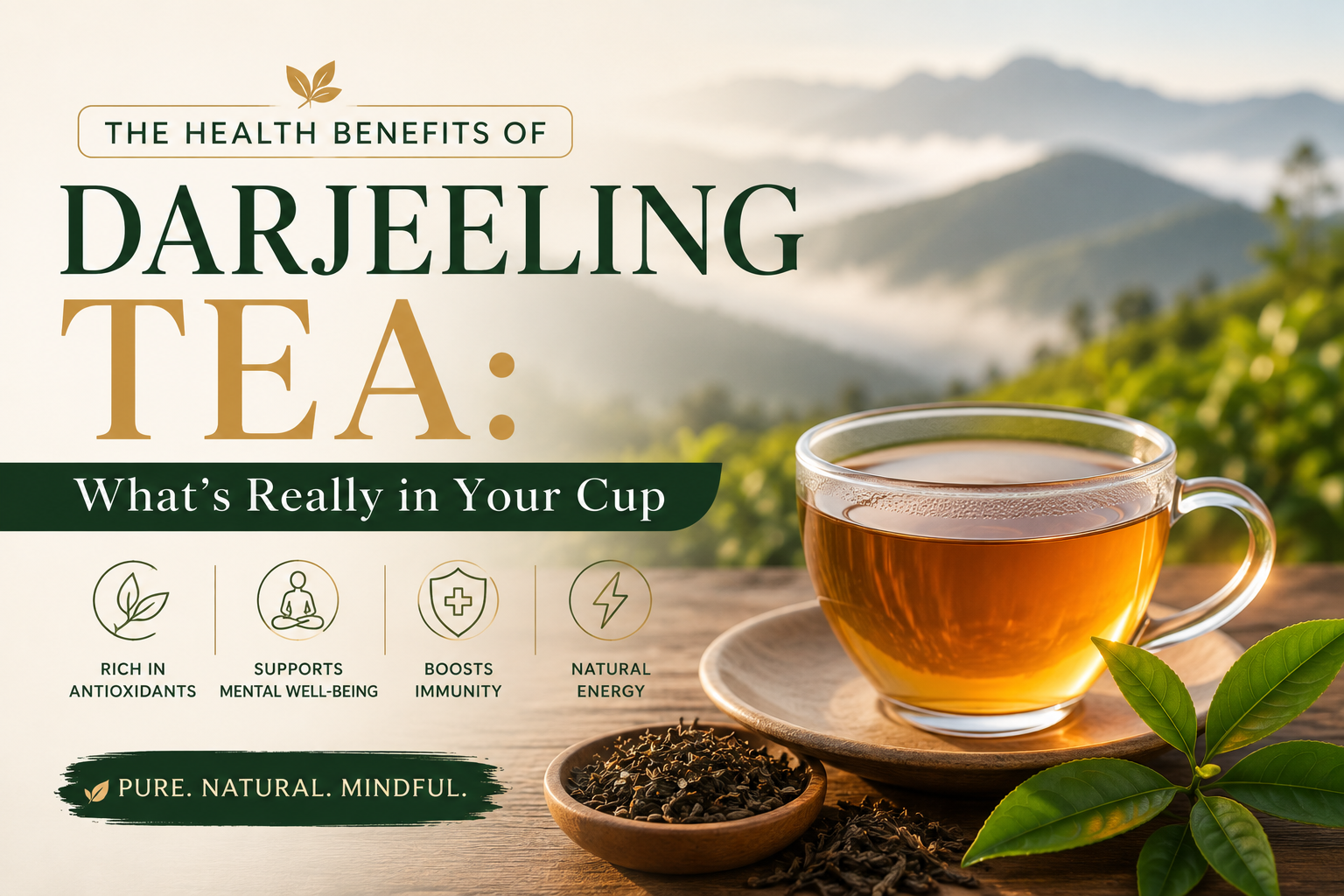
A grounded look at the health benefits of Darjeeling tea — its polyphenols, L-theanine and caffeine, and what research suggests about tea and everyday wellness.
Beyond its flavour, Darjeeling tea is a genuinely wholesome daily drink. Like all true teas from the Camellia sinensis plant, it is naturally rich in beneficial plant compounds. Here is a grounded look at the health benefits of Darjeeling tea — what is in the cup and what the research suggests.
Darjeeling tea contains a family of natural compounds: polyphenols (including catechins and, in black tea, theaflavins), the amino acid L-theanine, and a moderate amount of caffeine. High-altitude, slow-grown Himalayan leaf tends to concentrate these compounds.
Tea's signature effect comes from the pairing of caffeine and L-theanine. L-theanine is associated with a calm, focused state, and it appears to smooth out the caffeine "jitters" — which is why a cup of Darjeeling gives gentle, steady alertness rather than a spike and crash.
The polyphenols in tea act as antioxidants, helping the body manage everyday oxidative stress. Regular tea drinking has been associated in research with support for heart and metabolic health, though tea is a wholesome habit, not a medicine.
Unsweetened Darjeeling is a flavourful, low-calorie way to stay hydrated, and the ritual of brewing a pot is a small, mindful pause in a busy day — in keeping with our motto, Brew Mindfully, Live Calmly. Choosing clean, whole-leaf, orthodox tea also avoids the microplastics linked to some synthetic tea bags.
This article is general information, not medical advice. If you have a health condition or are sensitive to caffeine, check with a qualified professional.
Fancy a mindful cup? Explore our Darjeeling teas or read more in the Monk Sera journal.
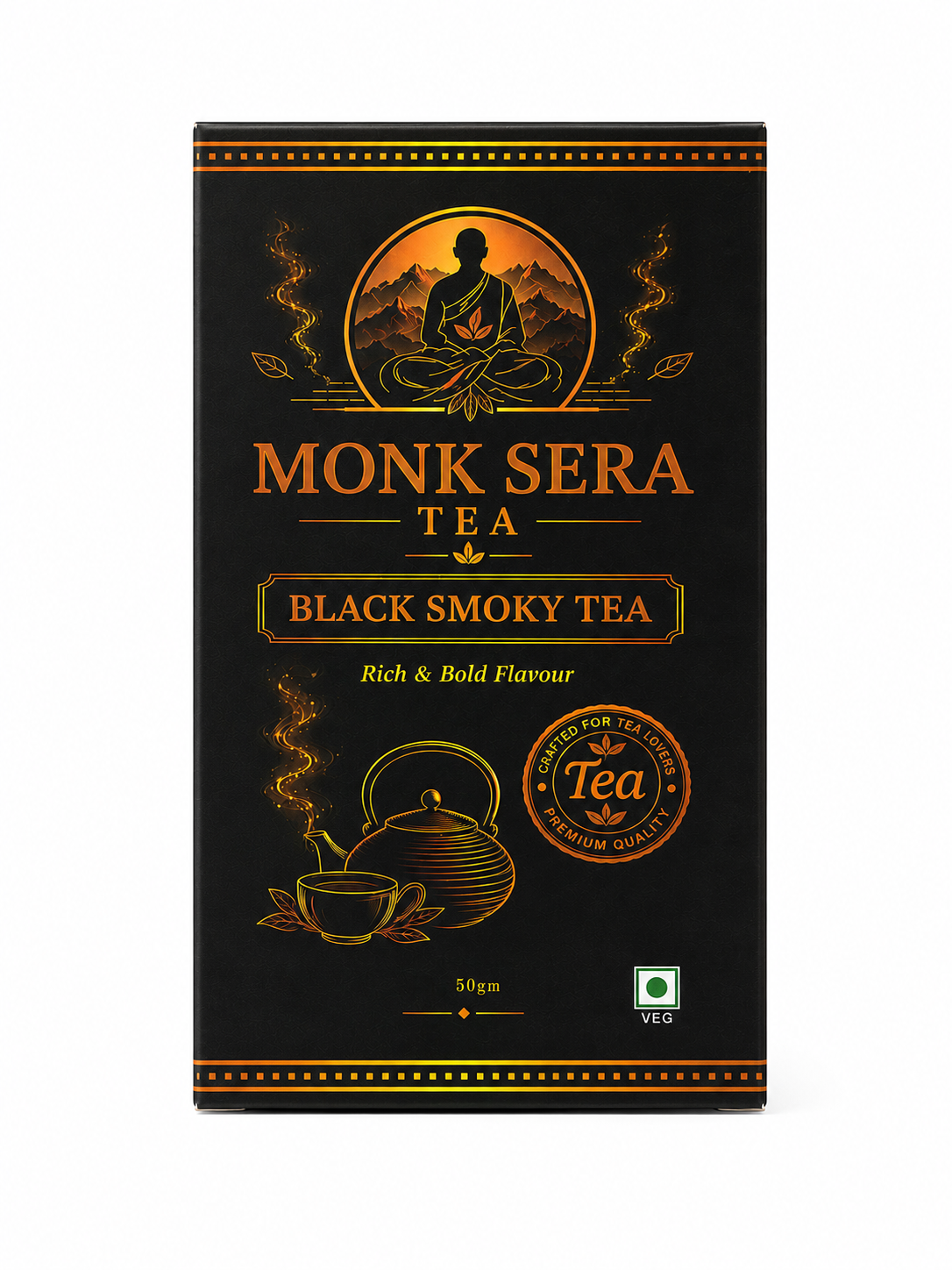
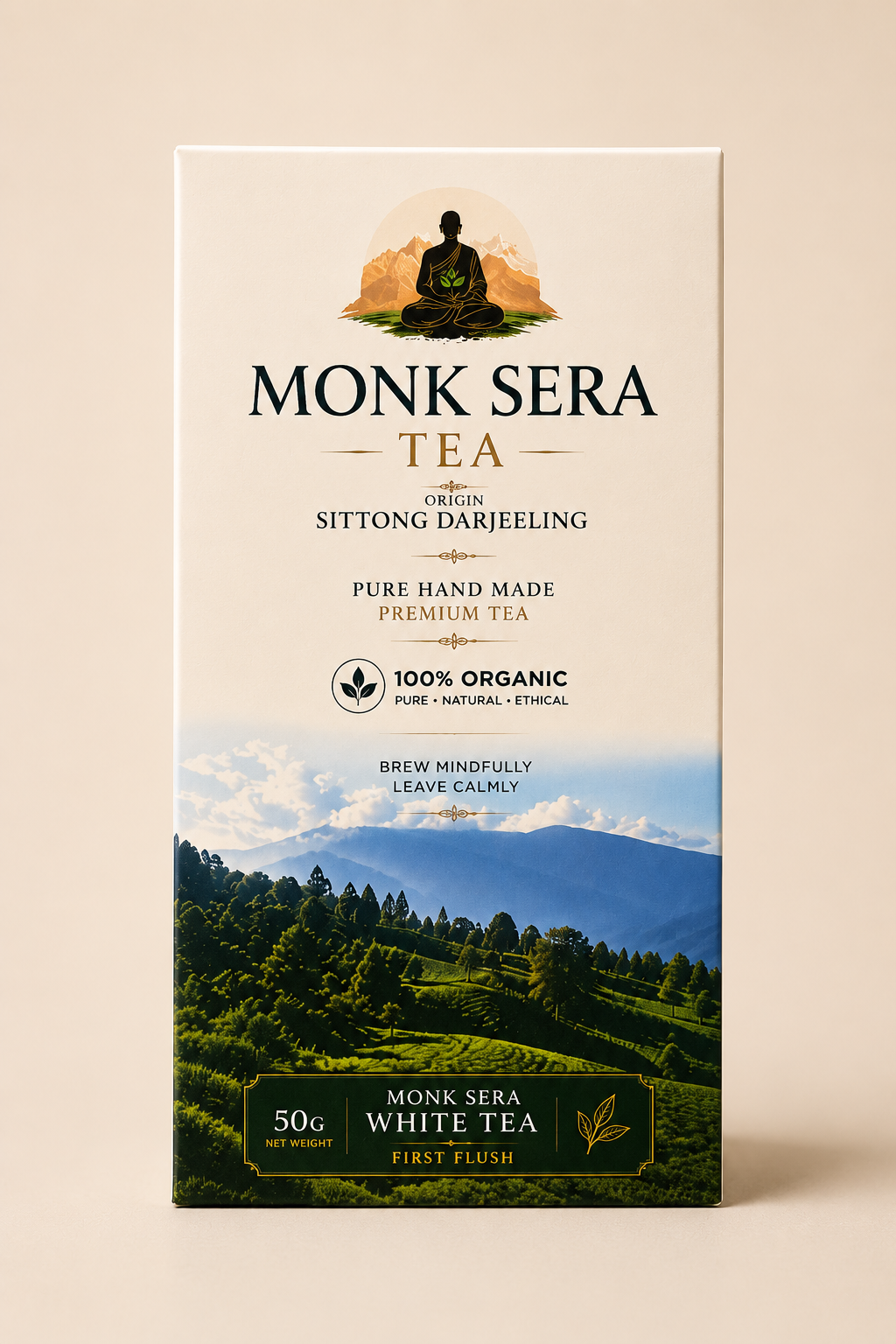
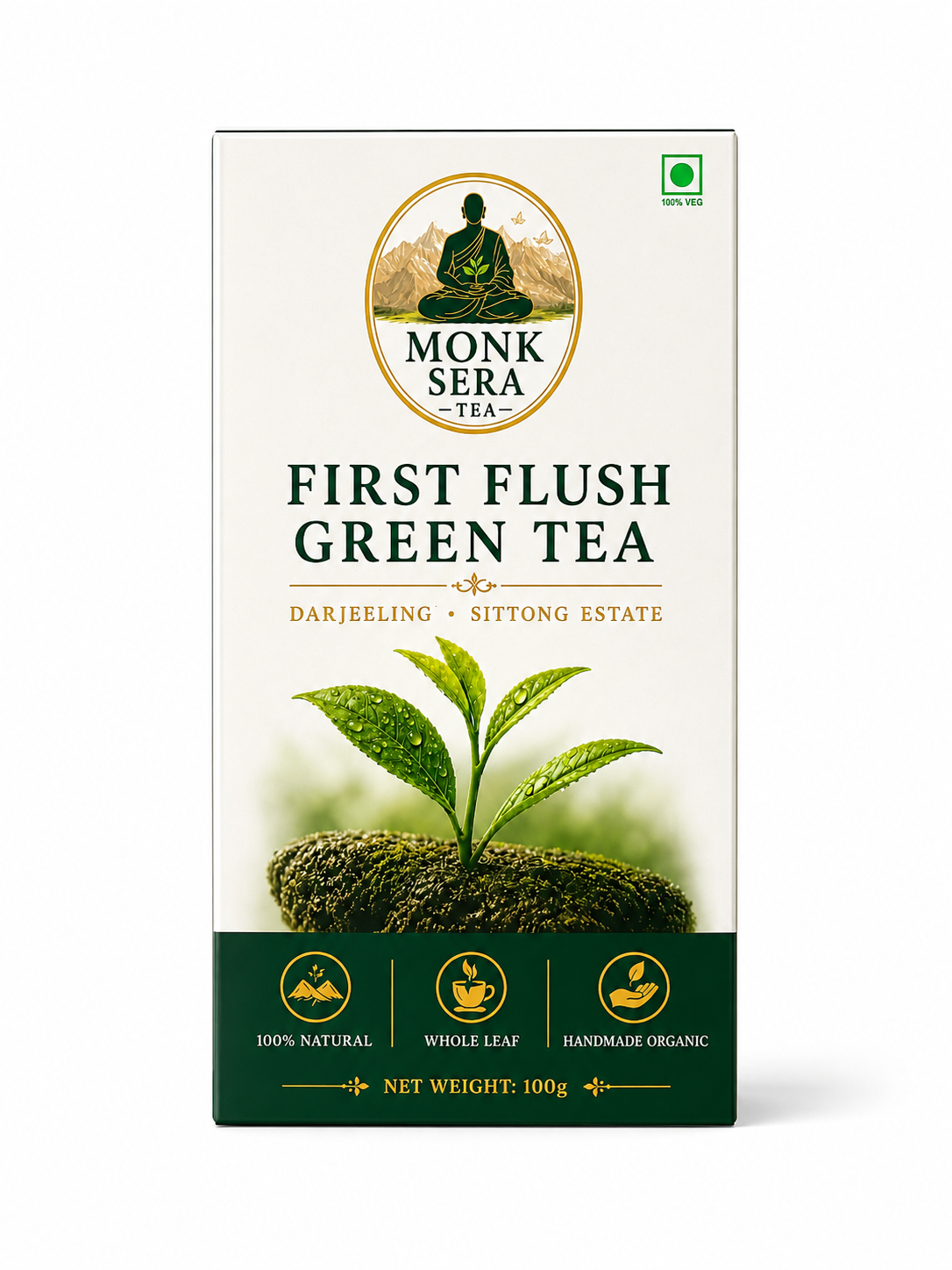
Explore our hand-crafted, single-origin Darjeeling and Sittong teas — small-batch, organic, shipped fresh. Brew Mindfully. Live Calmly.