 Monk Sera Tea
Brew Mindfully, Live Calmly
Monk Sera Tea
Brew Mindfully, Live Calmly
Monk Sera Tea
Brew Mindfully, Live Calmly
Monk Sera Tea
Brew Mindfully, Live Calmly
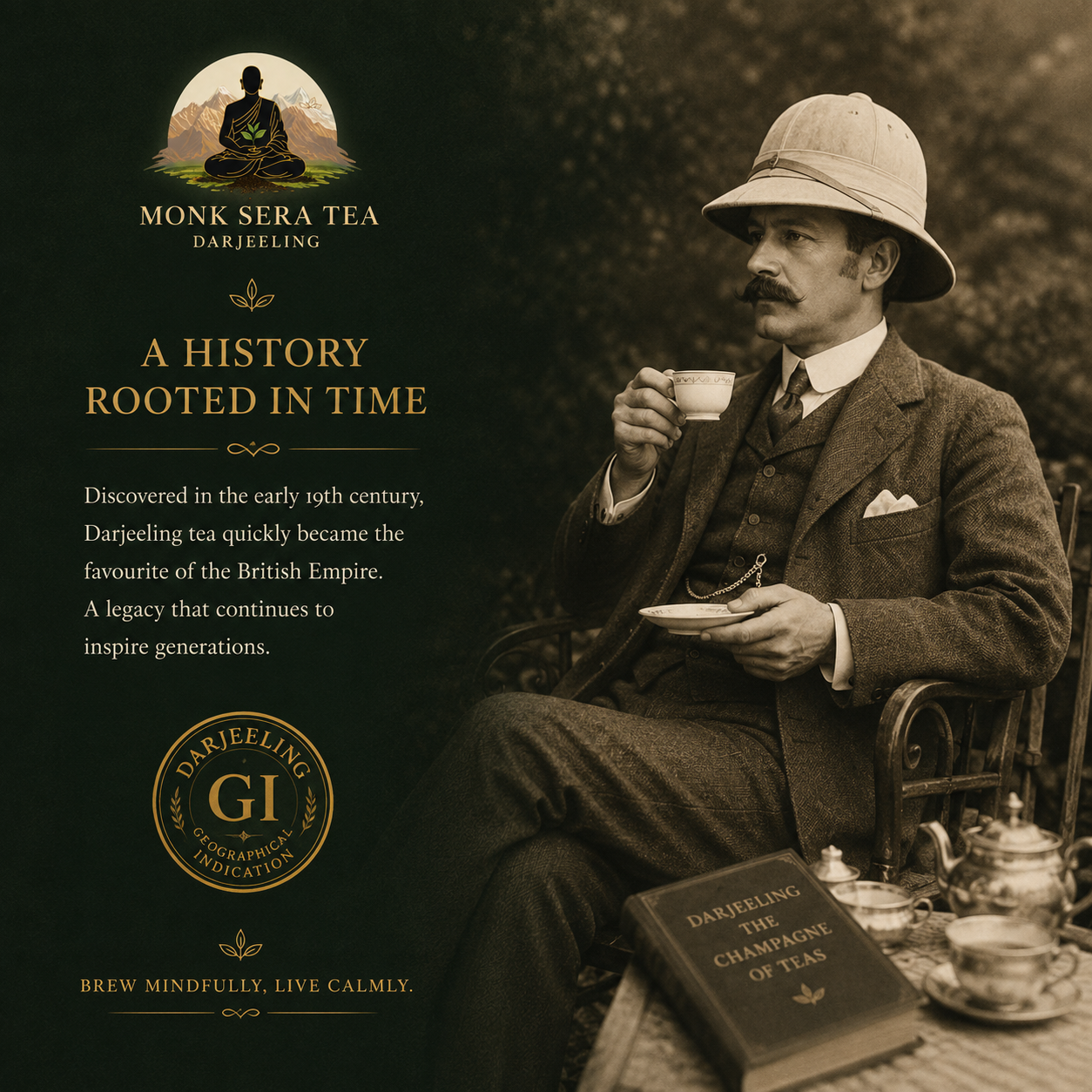
How India became a great tea nation — from wild tea in the forests of Assam and the first colonial gardens to Darjeeling, the Tea Board and the "Champagne of Teas".
Tea is so woven into daily life in India that it is easy to forget the plant behind the country's favourite drink has a dramatic, centuries-long story. From wild trees in the forests of Assam to the manicured slopes of Darjeeling, the history of tea in India is a tale of discovery, empire, craft and, eventually, world-class quality. Here is how India became one of the great tea nations on earth.
Long before tea was a commercial crop, the Camellia sinensis plant grew wild in the north-east of the subcontinent. The Singpho and other communities of upper Assam had brewed and chewed the leaf for generations. In 1823, a Scottish trader named Robert Bruce encountered these wild tea plants and the people who used them. His brother, Charles Alexander Bruce, carried the work forward after Robert's death, sending samples that would prove India could grow tea of its own.
At the time, tea was almost entirely imported from China. Keen to break that dependence, the British authorities set up a Tea Committee in 1834 to investigate whether tea could be cultivated on Indian soil. The Assam experiments succeeded: the first chests of Assam tea reached London in 1838, and the Assam Company — one of the earliest joint-stock tea enterprises — was formed in 1839. Commercial tea planting in India had begun.
The cool, misty hills of Darjeeling turned out to be perfect for the delicate China-variety tea bush. Around 1841, Dr. Archibald Campbell, the region's superintendent, planted tea seed experimentally near his Darjeeling residence. The bushes flourished, and through the 1850s the first proper gardens were established across the district. Within a few decades, "Darjeeling" had become a global byword for fine tea.
Grown between roughly 600 and 2,000 metres in the eastern Himalaya, Darjeeling tea developed a floral aroma and the famous muscatel character that no other region could copy. That singular quality earned it the nickname the "Champagne of Teas." The seasonal harvests — First Flush in spring, the muscatel-rich Second Flush in summer, and the mellow Autumn Flush — each tell a different chapter of the same terroir.
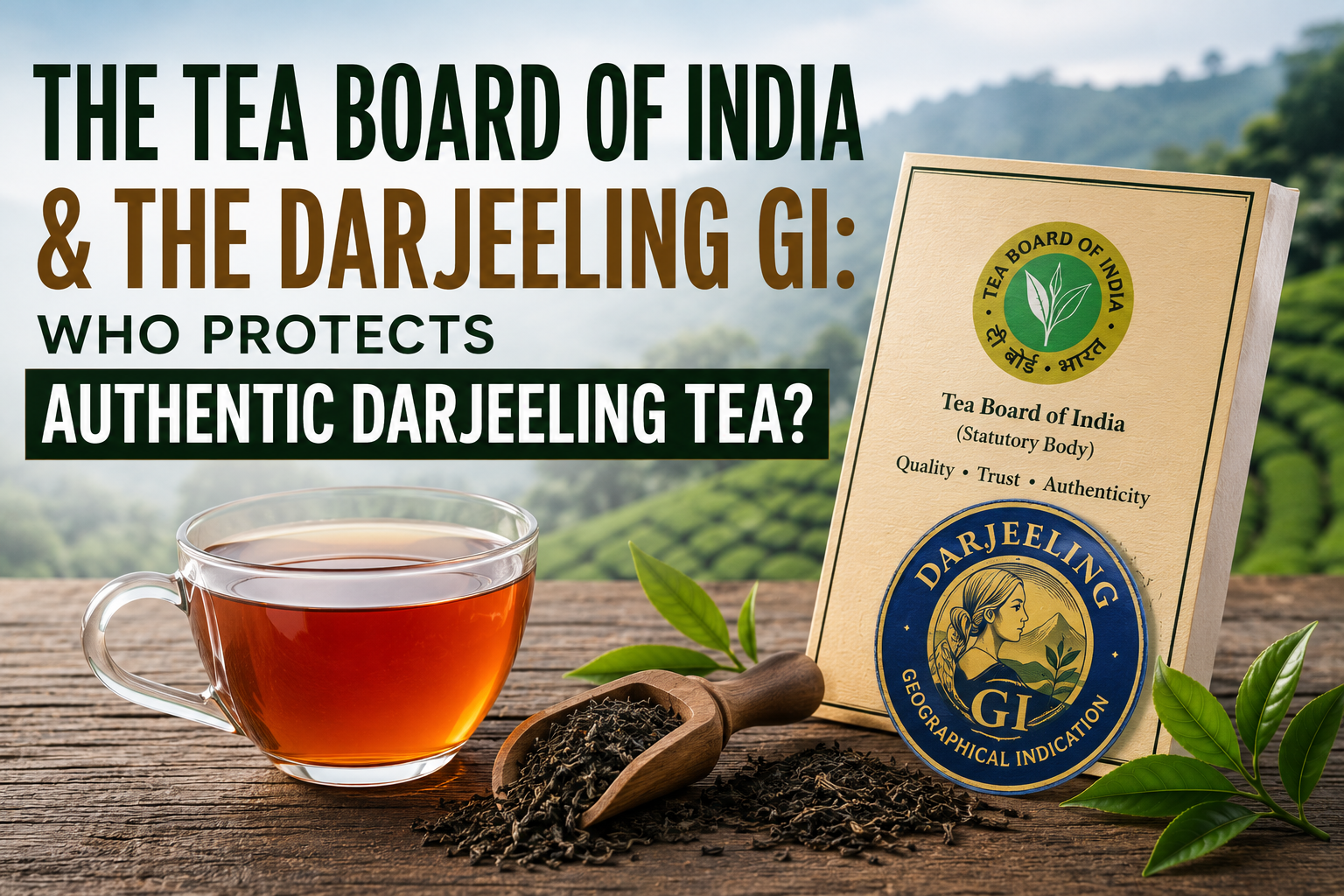
After independence, India organised its most important industry. The Tea Act of 1953 created the Tea Board of India, the statutory body that still regulates and promotes Indian tea worldwide. Decades later, in October 2004, Darjeeling tea became India's very first Geographical Indication (GI) — a legal protection meaning only tea genuinely grown and processed in the Darjeeling district may carry the name. We explain how that protection works in our companion guide, The Tea Board of India & the Darjeeling GI.
Today India is one of the world's largest tea producers, spanning robust Assam, aromatic Darjeeling, high-grown Nilgiri and more. Yet the finest chapter of the story is still the small-batch, hand-plucked, single-estate leaf that started it all. That is exactly the tradition Monk Sera continues — you can explore our Darjeeling teas here or read more in our tea journal.
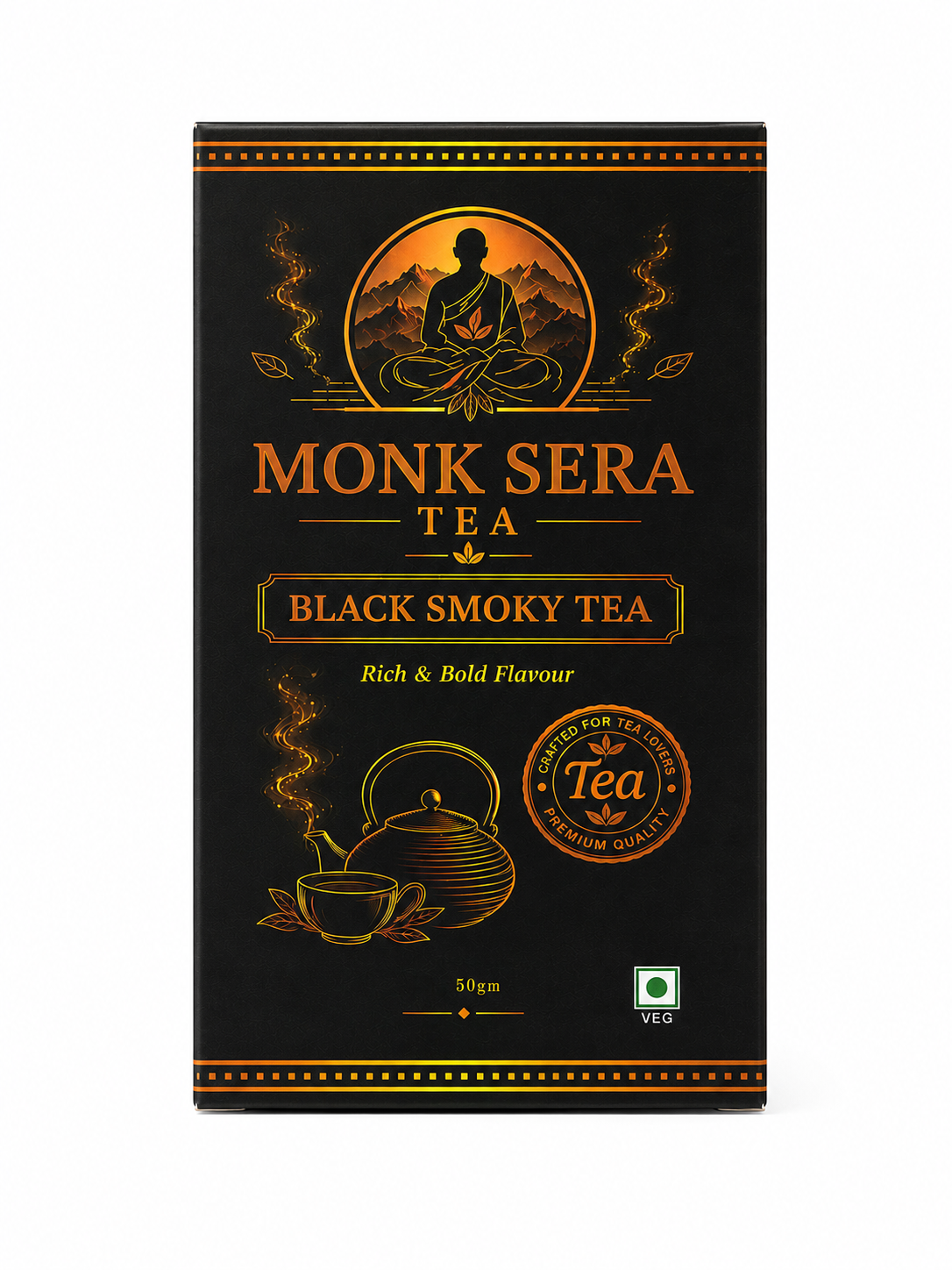
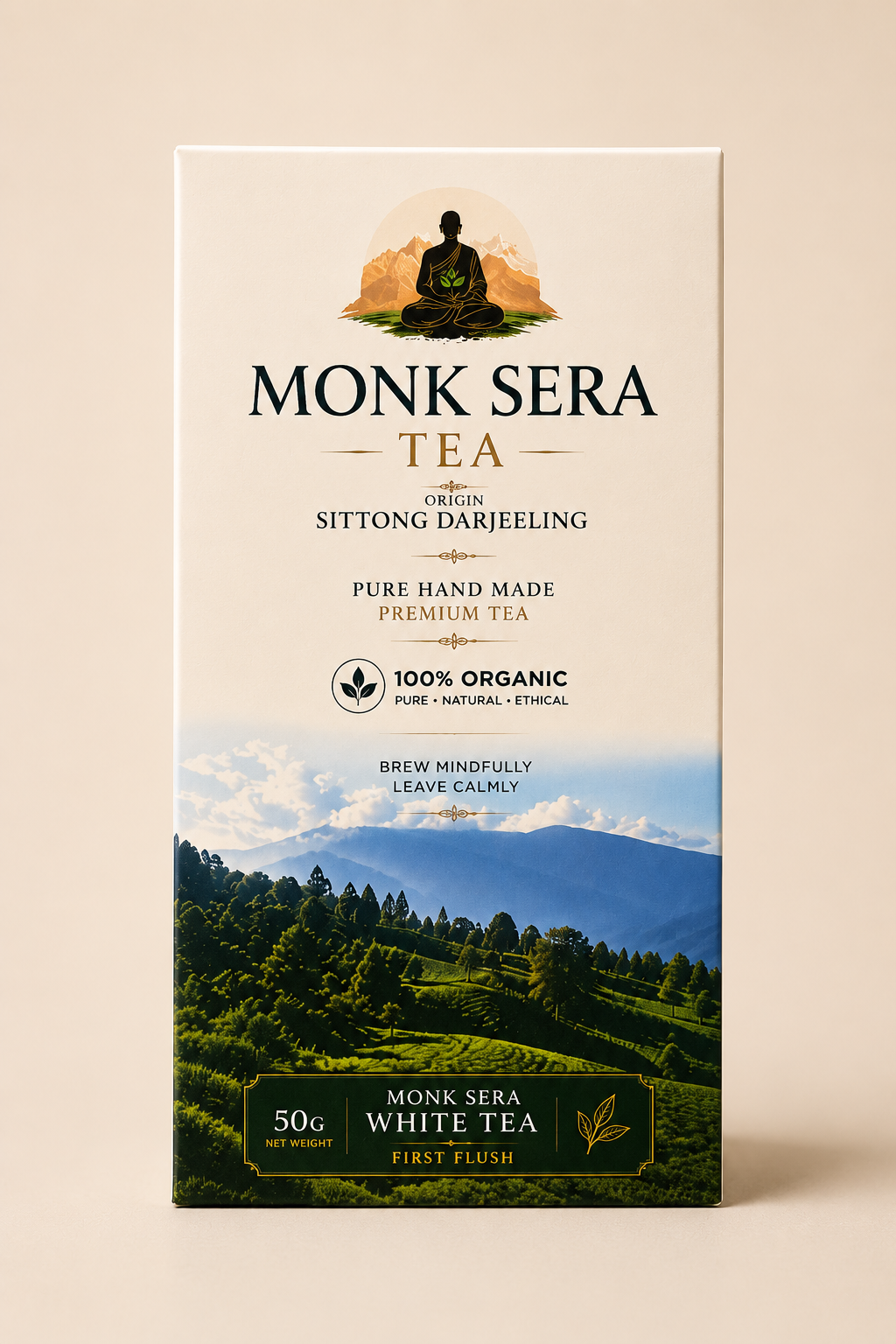
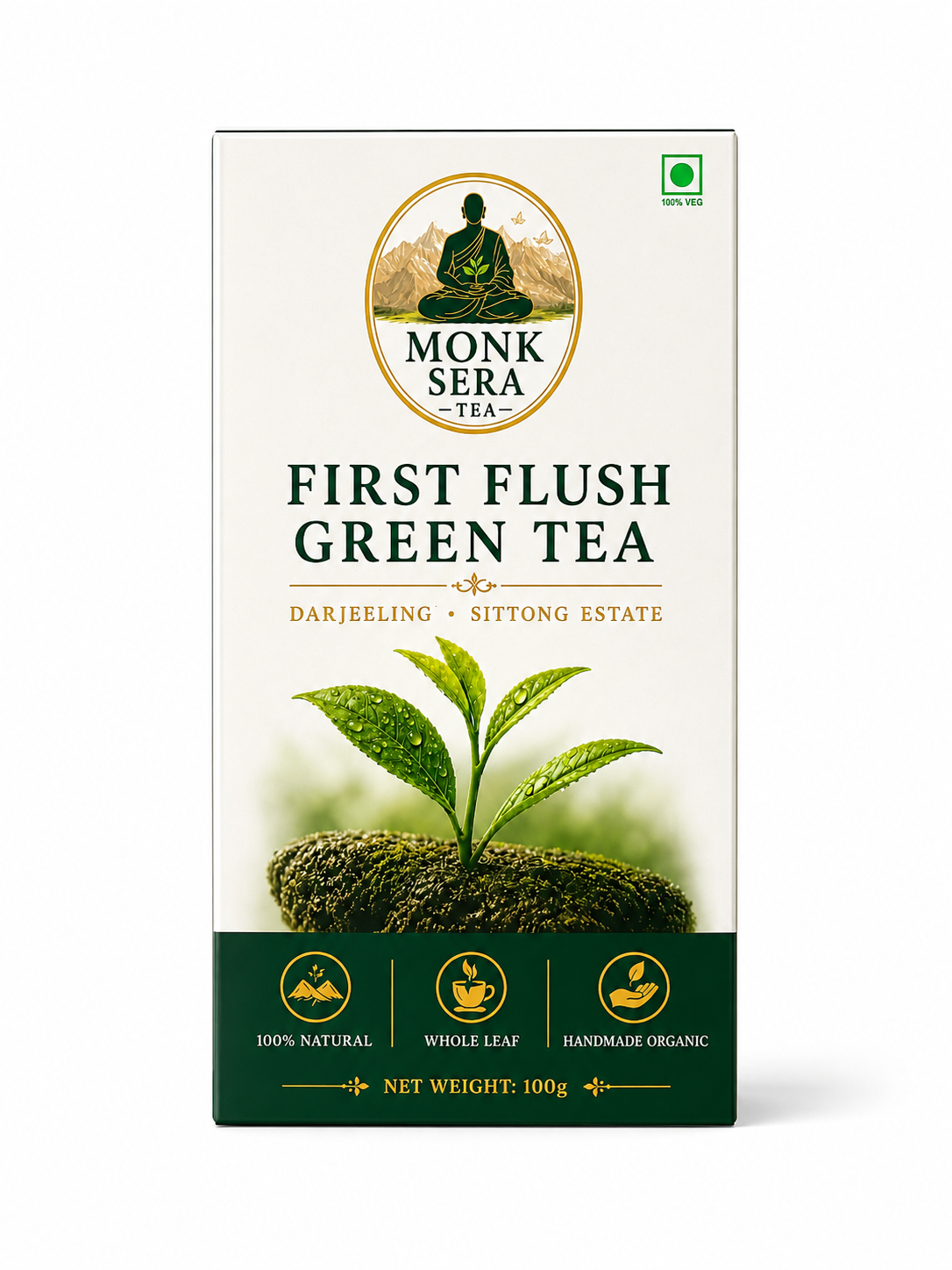
Explore our hand-crafted, single-origin Darjeeling and Sittong teas — small-batch, organic, shipped fresh. Brew Mindfully. Live Calmly.